

Don't blame Carlos Mendoza for the Mets' losing streak
In defense of the embattled Mets manager

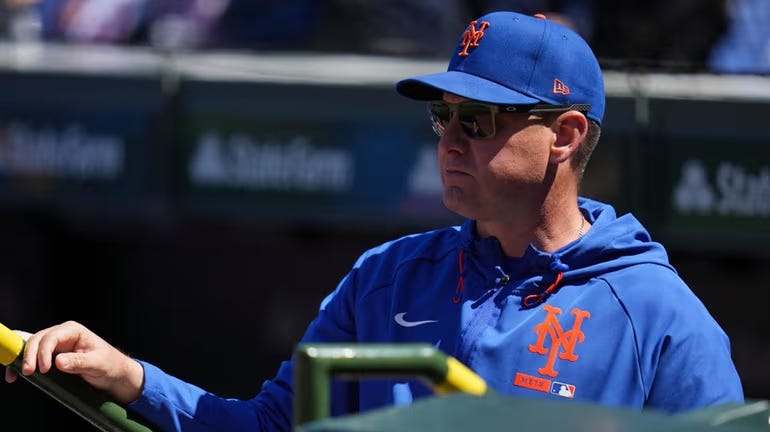
Is New York Mets manager Carlos Mendoza on the hot seat? That is the question Mets fans and others around baseball are grappling with as the Amazins are currently in the midst of a shocking 12-game losing streak.
But is this Mendoza’s fault?
The issues with the Mets that have been magnified during this losing streak can not be blamed on the manager. The biggest problem? With Juan Soto out since April 4 with a calf injury, the Mets’ offense has completely stalled out.
Even with Soto set to return on Wednesday in the second game of the Mets’ series against the Minnesota Twins, there are other flaws that can not be blamed on Mendoza.
Most of those flaws can be explained by poor roster construction and coaching staff turnover, both of which do not fall under Mendoza’s purview, but are the responsibility of president of baseball operations David Stearns.
After a disappointing 2025 season that saw the Mets collapse down the stretch and fail to advance to the postseason, Stearns made a lot of moves.
The first of those moves was a rare, one-for-one swap of Major Leaguers between contenders where he sent Brandon Nimmo to the Texas Rangers for Marcus Semien to help shore up the infield defense. So far, Nimmo is off to a scorching start with Texas with a .495 SLG, which would be a career high. On the other side, Semien’s bat is continuing to decline, and he is on pace for a career-worst OPS.
Stearns failed to add another established, starting-caliber corner outfielder, and that lack of depth has only been magnified with Soto out. 23-year-old rookie Carson Benge is hitting well-below the Mendoza line, Brett Baty is struggling at the plate while getting his first taste of outfield action and 38-year-old Tommy Pham just does not seem to have much left in the tank.
When Edwin Diaz chose to sign with the Los Angeles Dodgers, Stearns pivoted and signed Devin Williams to a three-year, $51 million deal to fill the closer role. Williams had a very rough 2025 after being traded to the New York Yankees, recording a 4.79 ERA and being demoted from the closer role. Even though he was just a year removed from being one of the top closers in baseball, there were real concerns about Williams.
Those concerns have not been assuaged. Williams was charged with the loss on Tuesday against the Twins, coming in with a tie game in the ninth and giving up a hit, walking three batters and allowing two runs to score without recording an out. Before Tuesday’s implosion, Williams had given up a grand slam to the Dodgers on April 15 and blew a save against the Cubs on Sunday. Through his first eight games, Williams has given up seven runs in 6 ⅓ innings and has a jaw-dropping .588 BAbip.
For a breakdown of Devin Williams’ struggles with the Yankees last season, check out this video from Trevor May:
The biggest, and most expensive move of the Mets offseason was signing Bo Bichette to a three-year, $162 million contract with player options for the 2027 and 2028 seasons. The early returns on that deal are not encouraging. Bichette, while playing third base for the first time in his career, is slashing .219/./.255/.281 with one home run through 23 games. Those numbers are almost identical to his disappointing, injury-riddled 2024 season that was supposed to be a fluke, where he hit .225/.277/.322 with four home runs in 81 games.
On the coaching side, Stearns cleared house this offseason. Notably, hitting coaches Jeremy Barnes and Eric Chavez and pitching coach Jeremy Hefner, who is one of the most widely-respected minds in the sport, were let go. Throughout the Mets’ 12-game losing streak, they have averaged just 1.8 runs per game, have been shut out three times and have scored more than two runs just three times.
This is not to necessarily blame the new hitting coaches, Major League hitting director Jeff Albert, hitting coach Troy Snitker or assistant hitting coach Rafael Fernandez, but there are real questions that need to be asked about the Mets’ organizational offensive approach.
It is not an encouraging sign that these questions are being asked, but at least as of now, the players are still on Mendoza’s side (all quotes are after Sunday’s loss to the Cubs via MLB.com’s Brent Maguire).
“It’s absolutely on us,” Devin Williams said. “[Mendoza] doesn’t swing the bat and he doesn’t throw a baseball. We’ve been in a lot of these games. It’s been close. Him or somebody else is not affecting that. If we’re not getting the job done, somebody else isn’t just magically gonna flip a switch and we’re gonna get it done. He’s putting guys in good positions. We’re not performing.”
“He’s done a fantastic job,” Francisco Lindor said. “This is not on him. He has made sure everyone here is prepared. Every coach here is prepared. We have the information; it comes down on us. Mendy’s our guy. He’s our leader. He’s in control and he’s done a tremendous job.”
“It’s on everyone. We’re in this together. Everyone has a part in this, and we’ve got to stick together,” David Peterson said. “Everyone’s got to take responsibility and accountability. We all need to look in the mirror and see what we can do better to help this team move in the right direction. That’s the job. Come back Tuesday, fight like hell and play our brand of baseball.”
It is easy to nitpick Mendoza’s performance. Sure, he could have pitched around Nico Hoerner on Sunday. On Tuesday, he could have gone to someone other than the struggling Williams with the game tied in the ninth. He could keep the struggling Benge on the bench more. But the Mets’ fundamental issues are out of Mendoza’s control.
This is a poorly-constructed roster that is not able to even tread water without Soto. That is not Mendoza’s fault, and it would be a shame if he loses his job because of that.